Sunday, June 12, 2022

CONTRABAND BLU-RAY REVIEW

Translation of an Italian newspaper ad from August 1980: ‘Experience First-Hand All the Battles and the Violence of Italian Smuggling!’  

In spite of the usual hyperbole given above, nothing could possibly prepare audiences for Lucio Fulci’s CONTRABAND (1980), which turned out to be the bloodiest Italian crime movie of them all! Original Italo pressbooks inevitably compared CONTRABAND to William Friedkin’s THE FRENCH CONNECTION (1971) and that film’s prime villain, Marcel Bozzuffi, here plays “the gangster from Marseilles who unleashes a chain of violence.” While it clearly derives its inspiration from Friedkin’s groundbreaking picture, Fulci’s film is your standard tale of Camorra in-fighting and revenge, albeit liberally splattered with outrageous scenes of graphic violence that rival anything in his much-discussed/praised cannibal zombie films. Produced by Sandra Infascelli, this was her next big Italocrime production following Umberto Lenzi’s last great contribution to the genre, FROM CORLEONE TO BROOKLYN (1979), but unlike the prolific Lenzi, CONTRABAND was Fulci’s only all-out crime film, which has finally made its worldwide Blu-ray debut thanks to the dedicated folks at Cauldron Films.


When motoscafi blu (“blue speedboat”) bandits Luca (Fabio Testi) and his brother Mickey (Enrico Maisto) are almost apprehended by the pappagallo (local slang for “police boat”) while smuggling cigarettes into Naples, they’re convinced that a rival contrabander named Sciarrino (Ferdinando Murolo), has ratted them out. They plan on teaching Sciarrino a valuable lesson with the help of Luigi Perlante (Saverio Marconi), a hot-headed but powerful gangster. However, Mickey is gunned-down the following day by a hitman disguised as a cop and Luca soon realizes that Sciarrino wasn’t responsible for betraying them to the Guardia di Finanza after all. In actuality it was the work of François Jocois better known as “The Marseilleise” (Bozzuffi, natch’), a vicious Marseilles drug lord out to replace the prosperous cigarette trade with a far stronger addiction… heroin.


As discussed earlier, CONTRABAND is very similar in concept to any number of camorra pics that take place on the Neapolitan docks (i.e., the Alfonso Brescia / Mario Merola films such as THE NEW GODFATHERS [1979]), but the primary reason for the film’s continued popularity— especially among fans of Fulci’s horror films—is the excessive amount of gore spilled: heads are blown apart, bodies are messily riddled with bullets, et cetera. As one of the film’s innumerable hitmen, Italian character actor Nello Pazzafini winds up boiled alive in a bubbling sulphur pit (“Asshole deserved ta end up like this!”), while Testi goes on to skewer his brother’s killer with a 9-inch nail. When one character is shot in the Adam’s Apple, his wound gushes voluminous quantities of gore, which is comparable to anything seen in Fulci’s splatter classics ZOMBIE (1979) or his pièce de résistance, THE BEYOND (1981). Come to think of it, this is one of his splatter classics!


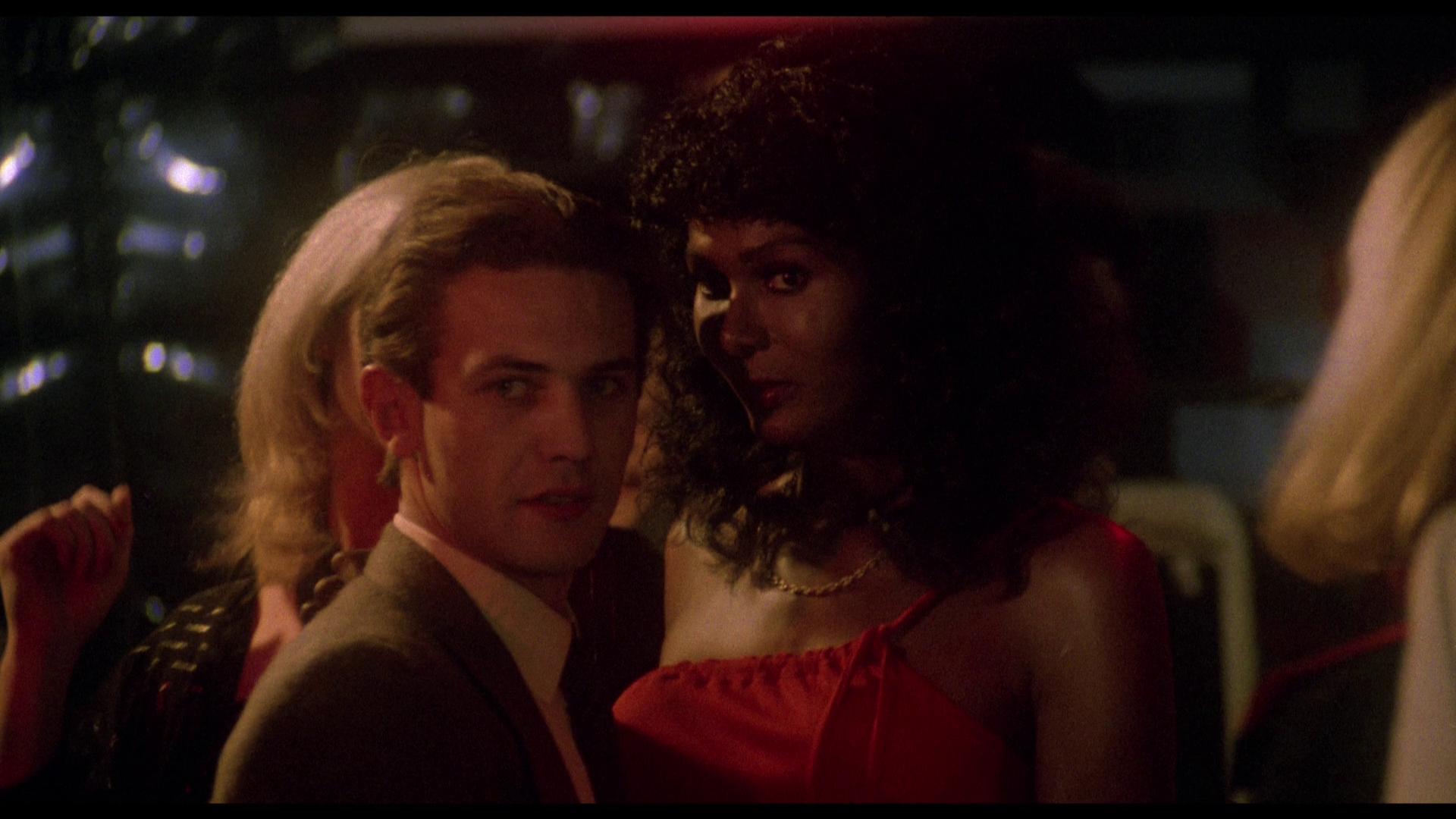
As the ruthless French connection, Bozzuffi is especially effective herein and actually tops his star-making turn in Friedkin’s influential film for general nastiness. When Ingrid (Ofelia Meyer), a member of the Frankfurt cartel, tries to sell him some heroin cut with baking soda (“You stupid cunt! …It’s half bicarbonate!”), Bozzuffi decides to torch her face with a Bunsen burner belonging to his hunchbacked chemist (Luciano Rossi, who filled a similar function in Ferdinando Baldi’s THE SICILIAN CONNECTION [1972]). In another highly exploitable scene, when Luca finds himself all on his own, his wife Adele (Ivana Monti) is brutally raped by one of the Marseilleise’s goons (the great Romano Puppo) as Luca helplessly listens on the phone. Like one of his gory, drawn-out horror set-pieces, the camera lingers on the vile act, which turns out to be one of the more unpleasant scenes in Fulci’s entire oeuvre. As Luisa, one of Perlante’s molls, transsexual actor Ajita Wilson bares her “tasty set o’ coconuts!” in a feverish strobe-light disco sequence, but also suffers further abuse at the hands of rival gangsters.


Efficiently handled by Fulci (who also briefly appears in front of the camera as a shotgun-wielding hitman) and his now famous accomplices including DP Sergio Salvati, editor Vincenzo Tomassi and composer Fabio Frizzi, CONTRABAND seems oddly out-of-place when compared to other poliziesco or mafia pics. The extreme gore and hyper-stylized photography imbue the entire film with a haunting, almost otherworldly feel, which is especially evident during the finale at a desolate seaside locale. Some of the slow-motion action scenes also add plenty of visual appeal and take the cinema stylings of Sam Peckinpah to almost ridiculous—but very welcome—levels, all of which is ably complimented by Frizzi’s bass-heavy rhythms and chugging percussion.


Originally released on U.S. home video by Mogul Communications in 1987 (“They want revenge… and the city is about to explode!”), this once collectible VHS tape was, for the most part uncut, but featured a hazy transfer, which did no favours for Salvati’s eloquently grey-and-blue drenched photography. The film eventually made its DVD debut in the U.S. in 2003 via Blue Underground (a non-anamorphic Dutch DVD was also released in 2001 courtesy of Italian Shock, but the less said about this edited DVD, the better), which was a vast improvement in terms of picture quality and also retained the proper 16x9 widescreen format. The film was subsequently released on DVD in several European countries including Germany and Denmark, however a UK DVD from Shameless also included an Italian language audio track with optional English subtitles. For the time, the jump to DVD was a considerable upgrade, but all of these releases can now be rendered obsolete with the arrival of Cauldron Films’ new Blu-ray. 


Licensed from the film’s Italian rights holder, Surf Film, S.r.l., CONTRABAND has been “restored from a 4K scan of the negative”, and looks absolutely magnificent. The 1080p resolution adds solid contrasts with plenty of shadowy detail and remarkable sharpness when compared to its SD counterparts. The image is, for the most part, still distinguished by Salvati’s cool grey-and-blue hue, but Cauldron’s new transfer also conveys an abundance of rich colours in several sequences (i.e., the disco club sequences), which also helps the many scenes of copious bloody violence really stand out. In a nice gesture, Cauldron has included both English and Italian audio options in LPCM 2.0 mono, which includes some slight differences in music cues, and while the Italian audio track sounds slightly more robust, the more familiar English variant also sounds perfectly fine, even if the English dubbing leaves a lot to be desired. Properly translated English subtitles are provided for the Italian audio (which again includes some minor differences) while English subtitles for the hearing impaired are included for the English version.


The extensive extras begin with a lively audio commentary with Cinema Arcana’s Bruce Holecheck, Mondo Digital’s Nathaniel Thompson, and author and film historian Troy Howarth all of whom have plenty to discuss about the film’s “atypical” nature and the film’s storied production history, which was partly financed by the local Camorra! They also talk about the overall “darker and somber” mood of the entire film, and how it plays out “very much like a horror film” with an “emphasis on sadism”, a point which is later expanded upon when discussing Fulci’s unfairly labelled “misogynist” tendencies. They also spend a lot of time talking about the many principal actors and their interesting careers including that “woman of mystery” Ajita Wilson and her brief but memorable time working in Italy. Of course, they discuss much, much more in what amounts to a thorough and very informative listen.


Further extras are provided by several revealing on-camera interviews conducted by Eugenio Ercolani, which begin with A Woman Under Fire (21m54s) wherein actress Ivana Monti discusses the early stages of her lengthy career, her move into film, and of course, the complicated and wonderful experience of working with Fulci. In From Stage to Slaughter (19m58s), theatre actor Saverio Marconi also recollects his time working in the Italian film industry in this career-spanning interview where he also chats about his “terrific rapport” with Fulci whom he recalls was “clever with a wicked sense of humour.” Sergio Salvati, one of Fulci’s most trusted DP’s is interviewed in Lucio and I (17m52s), wherein he fondly remembers their working relationship, the “tight-knit group of collaborators” Fulci assembled, and of course, he also discusses his rather gruff personality, which even bled into his private life. In The Real Lucio (13m24s), writer/director Giorgio Mariuzzo is very nostalgic about his experiences with Fulci, but he too, has nothing but positive things to say about the director and his working process, and freely admits he has an “aversion to horror.” A quartet of archival interviews featuring actors Fabrizio Jovine (5m34s) and Venantino Venantini (5m11s), Salvati (5m51s) and Fabio Frizzi (2m07s) are taken from the PAURA: LUCIO FULCI REMEMBERED VOL. 1 DVD and are a nice addition to an already over-stuffed package. Both the Italian and English language trailers, and a generous image gallery (4m22s) comprised of fotobuste, lobbycards, video artwork and other ephemera are also included. And if that weren’t enough, the first pressing includes the complete Fabio Frizzi score on a bonus CD (16 tracks, 33m23s), along with 5 mini-fotobusta/lobbycard reproductions, and a slick slipcover!


Enlivened by several stylish action sequences and gruesome gore, Lucio Fulci’s outrageous CONTRABAND amounts to a consistently engaging crossover of obvious appeal to both fans of Eurocrime or straight-ahead horror, and thanks to Cauldron Films, this key title in Fulci’s illustrious career finally gets the respect it deserves. Highly recommended! Order it from Cauldron Films with the Italian art cover or Graham Humphreys cover.

Friday, April 29, 2022

DRAGUSE / LE BIJOU D'AMOUR BLU-RAY REVIEW

Perhaps best known on these shores for his co-writer credit on Jean Brismée’s magnificent Eurogothic THE DEVIL’S NIGHTMARE (1971) and his shoddy nasty Nazi stinker FRAULEIN DEVIL (1978), the films of Patrice Rhomm have rarely—if at all—been discussed. Straddling the line between the highly individualistic films of Jean Rollin and the crass, budget-conscious works of Eurociné, Patrice Rhomm’s DRAGUSE (1976) and LE BIJOU D’AMOUR (1978) have unexpectedly arrived on Blu-ray (in superb transfers, no less!) thanks to Vinegar Syndrome’s recently revamped Peekarama line, and this fact alone should be more than enough to please even the most jaded Eurotrash enthusiasts.


David Léger (Olivier Mathot) is suffering from some serious writer’s block, as well as some very strange—and erotically charged—“satanic dreams”, all of which involve the same mysterious woman named Draguse (the lovely Monica Swinn). When David’s publisher Jérôme (director Rhomm) finally offers him a chance at paid work writing a collection of erotic novels, he is disappointed, deeming the job beneath him, but his spunky girlfriend (Martine Flety) assures him that “Only sex sells these days!”. Lacking inspiration, he decides to explore the seedier side of Paris by visiting sex shops and theatres (“The dirtier, the better!”), but he finds that most of the films and books lack erotic imagination. However, when he rents a secluded villa outside the city (“It’s like it was waiting for me.”), he is stimulated in more ways than one and begins to experience further “erotic nightmares” involving Draguse, which begin to take a toll on David as he struggles to differentiate between reality and fantasy…


Also known as LA MANOIR DE DRAGUSE (the film’s alternate onscreen title is LES PERVERSION LUBRIQUES), Rhomm’s rarely-seen oddity is, despite its lapses in logic, a thoroughly engaging film, which manages to muster up plenty of rather outlandish energy (which is helped along by Jean Fenol’s and Albert Assayag’s very pleasing score), or as one character in the film puts it, “abnormal ambiance.” The ghostly Draguse is first seen taunting David in his dreams while masturbating with a human femur bone (!), and later she performs a satanic blood ritual, but of course, all of this could merely be a figment of David’s over-zealous imagination, which culminates with a bit about a sleazy Nazi officer and his rather kinky photo shoot involving French porno regulars Claudine Beccarie and Erika Cool. More understated than is the norm for French adult films of the time, a nicely telegraphed final twist further reveals the film’s horror aspirations.


In keeping with the rather disorienting nature of DRAGUSE, the disc’s co-feature is another equally curious hybrid, once again aimed squarely at the French sex film market. True to form, the film opens with our protagonist Adrien (Jacques Manteil) getting it on with his editor and boss Gordonna (Brigitte Lahaie), who is the owner of “Confidences de l’etrange”, a magazine dedicated to the supernatural. When the lead reporter inexplicably resigns, Adrien is given the task of investigating Hugo de Baal, a recluse who“discovered the secret of the succubi”. Driving through the French countryside, he is surreptitiously greeted outside a cemetery by a scantily-clad woman (Murial Vatel) who, in a bizarre turn of events, sells him a ring that apparently belonged to the legendary Casanova! Naturally, Adrien satiates himself with a token grope session with this unusual woman before driving away. 


Also known as The Devil’s Fork, this ring turns out to have an unfortunate curse, which turns anyone who even touches Adrien into an uncontrollable sex maniac. To further complicate matters, if the bearer of the ring can’t pass it on within a week, then they shall suffer dire consequences. However, this optimum opportunity becomes increasingly difficult for Adrien when he arrives at Hugo de Baal’s secluded mansion populated by numerous sex-hungry succubi…


Also known as THE GEM OF LOVE, the primary motive here IS sex, but by virtue of its overall look and tone, LE BIJOU D’AMOUR also fits perfectly among many of Jean Rollin’s or even Jess Franco’s off-kilter and surreal horror films. The rather languid, almost dreamlike pace and a very recognizable score from frequent Franco collaborator Daniel White (numerous cues from Franco’s FEMALE VAMPIRE [1973], ZOMBIE LAKE [1980] and OASIS OF THE ZOMBIES [1981] are used) keep things moving along nicely. The game cast, which also includes Joëlle le Quément and Pamela Stanford (in a typical eye-popping role!) also help compensate for the film’s obvious shortage of budget. 


Vinegar Syndrome’s disc exhibits the usual high-quality transfers, which have been scanned in 4K and taken from their “original 35mm negatives”, so as to be expected, there is very little to complain about. VS even includes a disclaimer prior to the second feature about some “image stability issues”, which existed in the 4K master provided to them from the French licensor, but the casual viewer won’t really notice anything too distracting at all. In fact, both films look excellent with consistent, well-balanced tones and true colours. The DTS-HD Master Mono Audio is also clean and distortion free, which is especially pleasing given the nature of such low-budget productions and the usual dubbed performances. 


Extras begin with a detailed on-camera interview with Draguse herself—Monica Swinn (39m21s)—wherein she talks about her time at the Belgian National Theatre and her “accidental” foray into cult films. Even though her career has surprised her (“I thought this would never come out!”), she also has no qualms about her choices and the rebellious attitude of the so-called “ass” films she made. Of course, she also speaks at great length about her time working with Jess Franco and the budgetary constraints of working with the French production house Eurociné. In the second interview, actor Erika Cool (11m58s) openly discusses how she got into making adult films at the time, her early days in Belgium working for the Querat brothers, and several interesting facts about many of her co-stars in the film. Finally, co-producer and writer Eric de Winter (14m10s) is also on hand and goes over the entire process of making the film, pointing out how erotica was a “must” to ensure viability. Interestingly, DRAGUSE was also the film first rated X after the legalization of pornography in France in 1976, which helped pave the way for future like-minded productions. Other extras include a trailer for LE BIJOU D’AMOUR (“The film that opens the most secret doorways of sexual hell!”) and an alternate—and much stronger—sex scene from the same film. 


Enthusiastically cryptic to unfold and possessing some rather striking moments of genuine weirdness, this double feature Blu-ray from the folks at Vinegar Syndrome is a very welcome release indeed, which of course comes highly recommended! Order it direct from Vinegar Syndrome here. 

Sunday, January 2, 2022

UNPOPPED CINEMA'S TOP 25 BEST DISCS OF 2021

Between long hours of work (which required many days of travelling away from home), raising a family, and a few other writing assignments, I was  unable to devote much time to my humble little blog, Unpopped Cinema. But despite not reviewing as many discs as I had hoped in 2021, I still put aside plenty of time to watch several notable Blu-ray releases from several incredible, hard-working labels. As I diligently compiled this list, it was rather astonishing to see just how many must-have box sets were released this past year. Unfortunately, a number of highly-anticipated collections such as Severin’s ALL THE HAUNTS BE OURS - A COMPENDIUM OF FOLK HORROR and NASTY HABITS - THE NUNSPLOITATION COLLECTION, as well as Arrow Video’s mammoth SHAWSCOPE VOLUME ONE, will fall outside the scope of this list. But, there is no doubt that they, too, would have made the cut if I had received them sooner. So without further ado, let’s take a look at the many notable 2021 Blu-ray releases below, which amount to a mere fraction of this year’s long list of highlights, all of which come highly recommended, of course.
 

BEYOND TERROR [1980] (Cauldron Films) – Memorably mixing elements of the ‘quinqui’ (juvenile delinquent) films and horror, Tomás Aznar’s chilling efficient film has remained most elusive to Spanish horror fans. But, thanks to the efforts of Cauldron Films, they have come to the rescue of this rarely-seen film, which features a brand new, eye-popping 4K transfer and a terrific audio commentary from Diabolique editor-in-chief Kat Ellinger. Read my review at Diabolique. 


BLOOD FOR DRACULA [1973] (Severin Films) – Paul Morrissey’s follow-up to his outrageous FLESH FOR FRANKENSTEIN (1973) has been in desperate need of an HD upgrade for quite some time, so it’s great to see it finally get all the respect it deserves. A personal favourite of Severin head honcho David Gregory, this 3-disc set (one UHD, a Blu-ray and soundtrack CD) is a true labour of love that contains several excellent special features and a transfer that puts every other release to shame. Further icing on the cake includes a slick digipack housed in a handsome slipcase featuring eye-catching artwork from Elizabeth Yoo.


CAMILLE KEATON IN ITALY [1972 – 1974] (Vinegar Syndrome) – Never failing to impress, this 3-disc box set was a terrific surprise from VS. Gathering together Riccardo Freda’s TRAGIC CEREMONY (1972) and two of her most obscure films, namely Elo Pannaccio’s weirdly-hypnotic SEX OF THE WITCH (1972) and Roberto Mauri’s visually ambitious—and once impossible-to-see—MADELEINE (1974) made a lot of European fans very happy indeed. Of course, VS doesn’t skimp on the extras either with several worthy special features from film historians and authors Samm Deighan, Kat Ellinger, Art Ettinger, Rachael Nisbet, and Camille Keaton herself. 


CINEMATIC VENGEANCE [1974 – 1982] (Eureka Entertainment) – Having already released several martial arts films, Eureka surprised everyone with this elaborate 4-disc box set dedicated to the works of Taiwanese director Joseph Kuo. While not every title is a winner (the standouts being SHAOLIN KUNG FU [1974], THE 18 BRONZEMAN[1976] and THE 7 GRANDMASTERS [1977], in my humble opinion), this is a hugely entertaining set nonetheless that is jam-packed with plenty of extra features, and of course, the films themselves look better than ever. So snap this up while you still can!
 

THE CRIMES OF THE BLACK CAT [1972] (Cauldron Films) – One of the more memorable early gialli outside the works of Dario Argento, Lucio Fulci or Sergio Martino, Sergio Pastore’s well-mounted thriller has been the victim of several shoddy transfers over the years. Cauldron Films’ new 4K restoration finally restores the film to its original luster, reinstating Guglielmo Mancori’s original 2.35:1 framing, which is a vast improvement over any previous release. Extras include a pair of very worthy audio commentaries from Troy Howarth and Nathaniel Thompson and Fragments of Fear podcasters Peter Jilmstad and Rachael Nisbet. The original Limited Edition (sadly, now OOP) also included a bonus CD of Manuel De Sica’s superb score in its entirety, a collector’s booklet, and slipcover. 


DEAD & BURIED [1981] (Blue Underground) – This is yet another beautiful, perfectly nuanced 4K upgrade from BU, which brings out the best in Steven Poster’s atmospheric lighting, which only enhances the appeal of this already fantastic film. This 3-disc set, which includes a UHD, Blu-ray, and a soundtrack CD of Joe Renzetti’s score, is loaded with the usual illuminating extras BU is known for having. 


THE DEAD ZONE [1983] (Scream Factory) – In what is considered one of the best Stephen King film adaptations, David Cronenberg’s most accessible film finally gets the recognition it rightly deserves with Scream Factory’s new Collector’s Edition Blu-ray. Alongside a vast array of new and archival special features, SF’s flawless 4K scan of the original camera negative is a sight to behold and is the best it has ever looked. A superb release in every way!
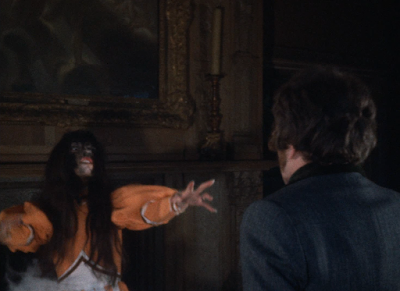
 

THE DUNGEON OF ANDY MILLIGAN [1965 – 1984] (Severin Films) – Following their exhaustive AL ADAMSON box set from last year, the folks at Severin has outdone themselves yet again with this all-encompassing descent into the world of Andy Milligan’s fascinating filmic oeuvre. Highlighted by the once thought-to-be-lost uncut versions of TORTURE DUNGEON (1970), BLOODTHIRSTY BUTCHERS (1970), and THE MAN WITH TWO HEADS (1972), every film in this lovingly assembled box set features brand new transfers and a wealth of extras including Andy Milligan’s Venom, an excellent 128-page book written by Stephen Thrower. Again, the folks at Severin have truly outdone themselves, and this may well be the very best release of the year!


THE EUROCRYPT OF CHRISTOPHER LEE [1962 – 1972] (Severin Films) – Collecting together several of the iconic star’s more obscure European outings (including the worldwide disc debut of Giuseppe Veggezzi’s intriguingly odd CHALLENGE THE DEVIL [a.k.a. KATARSIS, 1963]), Severin’s meticulously curated box set also includes 24 episodes of Theatre Macabre, a polish TV show (for which Lee delivered the intro and outro), numerous rarely-seen documentary shorts, archive interviews and so much more. The set also includes a superb 88-page book from Lee biographer Jonathan Rigby. Essential!


FLESH FOR FRANKENSTEIN [1973] (Vinegar Syndrome) – Thanks to the tireless folks at Vinegar Syndrome, this long-awaited HD release of Paul Morrissey's undisputed cult classic has arrived in fine style indeed. Beautifully packaged with 2 Blu-rays and a UHD, the film includes Polarized 3-D, Anaglyph 3-D, and flat viewing options, as well as a multitude of archival and newly-produced extra features, including a new audio commentary from Samm Deighan, Kat Ellinger, and Heather Drain. It’s so great to finally have this film back in active circulation again and looking so good too!


FREE HAND FOR A TOUGH COP (Fractured Visions) – Although never released on these shores in an English-friendly version, this solidly entertaining caper from director Umberto Lenzi gets the royal treatment via Fractured Visions’ recent UK Blu-ray. The copious extras include two audio commentaries (one from Mike Martinez and the other from Troy Howarth and Nathaniel Thompson) and a wealth of on-camera interviews with many of the film’s cast and crew courtesy of Eugenio Ercolani. Great fun and worthy of repeat viewings. 


HOMEBODIES [1974] (Kino Lorber Studio Classics) – Barely released theatrically and never issued on disc, Larry Yust’s black comedy (which occasionally and effectively delves into horror territory) is an offbeat sleeper, which deserves to have a larger audience. Six old folks refuse to move from their rundown tenement and eventually resort to murder, but despite their very unorthodox efforts, the wrecking ball looms closer and closer each day. Anchored by several terrific performances (with Paula Trueman being a particular standout) and plenty of insightful social commentary, it’s great to have this underrated gem finally available on Blu-ray. 


THE HOUSE OF LOST WOMEN [1982] (Severin Films) – Impossible to see for years, this is one of Jess Franco’s more twisted, iconoclastic works, which seeks to shock and provoke at every instance. Featuring standout performances from the ever-reliable Antonio Mayans and the utterly shameless Lina Romay, Severin’s new Blu-ray looks just about perfect especially given the inherent nature of such a low-budget production. Extras include Severin’s ongoing doc In the Land of Franco Part 6 with Stephen Thrower and Mayans visiting several filming locations in southern Spain, an on-camera interview with Thrower, a detailed audio essay from Robert Monell, and a bonus 16-track soundtrack CD of Daniel J. White music cues.
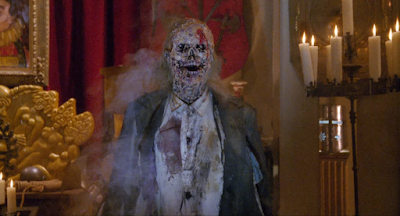
 

THE HOWL OF THE DEVIL [1988] (Mondo Macabro) – Never officially released on any home video format anywhere in the world, MM has come to the rescue of this excellent late-entry effort from Spanish horror icon Paul Naschy. Featuring a new 4K scan from the original camera negative, the fact that this even got released is a cause for celebration, so having it look this good is a minor miracle. MM also includes interviews, an archival promotional making-of doc, and an audio commentary from Naschycast’s Rod Barnett and Troy Guinn. 


HUNTING GROUND [1983] (Mondo Macabro) – Far from your standard rape/revenge film, Jorge Grau’s intelligent look at an idealistic defense attorney (Assumpta Serna) and the vagaries of justice is a real slow burn and possibly one of Grau’s darkest films. As usual, MM’s first-rate presentation of this once exceedingly difficult-to-see shocker looks just about flawless, which features a brand new 4K scan taken from the film’s OCN. Extras include a lengthy archival interview with the director, while the now OOP Limited Edition also included a 20-page booklet with writing from Ismael Fernández.


THE KINDRED [1987] (Synapse Films) – Showcasing loads of practical F/X work, this long-gestating project from the folks at Synapse Films arrived earlier this year and was well worth the long wait! Starring Amanda Pays, Rod Steiger, and Kim Hunter, this outstanding creature feature has never looked better than it does here with an exceptional new 4K transfer of the 35mm interpositive. Housed in a beautiful Steelbook and slipcover, this 3-disc set (one Blu-ray, one DVD, and one CD) also includes many extras, including Inhuman Experiments, a thorough documentary from Michael Felsher’s Red Shirt Pictures. Highly recommended!
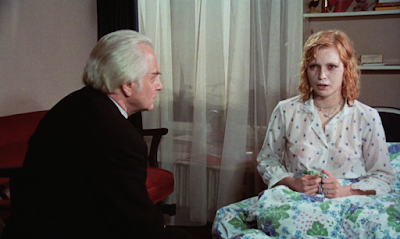
 

MAGDALENA POSSESSED BY THE DEVIL [1974] (Dark Force Entertainment) – This unapologetically lewd German rip-off of THE EXORCIST (1973) from Schoolgirl Report director Walter Boos’ has finally been given a much-needed overhaul. Long unavailable, Dark Force’s new uncut—and properly framed—transfer is quite the revelation. To make up for the lack of extras, an appropriately lurid slipcover was included with the first pressing. 


MAIL ORDER MURDER: THE STORY OF W.A.V.E. PRODUCTIONS [2020] (Saturn’s Core Audio & Video) – Even if you’re entirely unfamiliar with Gary Whitson’s W.A.V.E. Productions, Ross Snyder’s and William Hellfire’s documentary is sure to entertain. Set-up in 1987, Whitson, a dedicated horror fan, began making SOV (shot-on-video) films, which he churned out quickly and very, very cheaply. Anyone willing to fund one of his productions that had a particular fetish or bizarre request resulted in several far-out films, many of which generally revolved around horror or sleaze. Interviews with many of the actresses associated with W.A.V.E. (including Tina Krause) and an embarrassment of video clips from the over 400 films Whitson produced keep things from ever getting dull. While it may not convert newcomers to appreciate Whitson’s zero-budget efforts any better, it’s a great doc nonetheless and a fantastic debut for Saturn’s Core Audio & Video.  


NIGHTMARE ALLEY [1947] (Criterion Collection) – Set against the seamier side of carnival life, this is the darkest of film noirs, with Tyrone Power and Joan Blondell giving unforgettable performances. Criterion’s new restoration is a noticeable improvement over Fox’s 2005 DVD, further enhancing Lee Garmes' outstanding photography. Thankfully, James Ursini’s and Alain Silver’s audio commentary from that earlier disc is ported over alongside several new interviews and extras. 
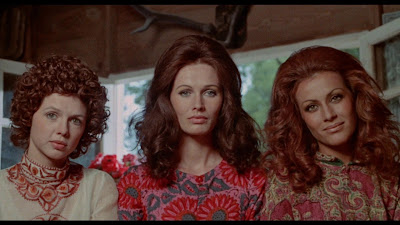
 

QUEENS OF EVIL [1970] (Mondo Macabro) – Frustratingly difficult to see for many years in anything approximating a decent English-friendly version, thanks to the continued efforts of MM, Tonino Cervi’s mesmerizing film finally arrives on Blu-ray in spectacular fashion. Aside from a much-improved transfer, the disc also includes several worthwhile extras including an audio commentary from Samm Deighan and Kat Ellinger and a wonderful interview with the film’s late star Ray Lovelock. For those lucky enough to snag the 2-disc Limited Edition, a 20-page booklet with writing from Roberto Curti and a DVD of the full unexpurgated 3h20m interview with Lovelock was also included. Read my review at Diabolique.


PRIMETIME PANIC [1981 – 1983] (Fun City Editions) – Highlighting the works of producers Leonard Hill and Philip Mandelker, this 3-disc box set includes a trio of must-see TV films including Joseph Sargent’s FREEDOM (1981), Roger Young’s New York set DREAMS DON’T DIE (1982), and Jonathan Kaplan’s DEATH RIDE TO OSAKA(1983) starring Jennifer Jason Leigh. Several illuminating audio commentaries from Amanda Reyes, Dino Prosperio, Lars Nilsen and Fun City’s Jonathan Hertzberg add further enjoyment to this already spectacular release. A fantastic set, which gets my highest recommendation!


RAIDERS OF ATLANTIS [1984] (Severin Films) –Missing-in-action since Prism’s 1983 Beta/VHS videocassette, Ruggero Deodato’s indescribable, crazy mix of sci-fi, post-nuke and ’80s action finally gets a new lease on life via Severin’s beautiful new Blu-ray. As usual, Severin adds plenty of bang for your buck with a couple of on-camera interviews with Deodato and the film’s DP Roberto D’Ettore Piazzoli and an entertaining audio commentary with Vinegar Syndrome’s Brad Henderson and actor Tony King.


ROBOTRIX [1991] (88 Films) – Category III superstar Amy Yip headlines this wildly entertaining Hong Kong action film mixing elements from both THE TERMINATOR (1984) and ROBOCOP (1987), martial arts, gore, and a healthy dose of erotica to max out that Category III rating. 88 Films’ Limited Edition Region B Blu-ray contains the uncut film with both English and Cantonese audio options along with several unique features and an 80-page perfect-bound book on the film and Cat III cinema. 
 

WEIRD WISCONSIN: THE FILMS OF BILL REBANE [1965 – 1988] (Arrow Video) – Usually relegated to cheap, non-authorized bargain DVDs, most of Bill Rebane’s work has never acquired any sort of respect. While not for everyone, Arrow Video has nonetheless compiled most of the director’s work into a lavishly-produced 4-disc box set, which houses six of his films along with David Cairn’s feature-length documentary WHO IS BILL REBANE? (2021). Of course, as with any box set from Arrow Video, they don’t skimp on the extras, including several newly-produced featurettes, interviews, and Discovering Bill Rebane, a terrific overview of the man’s films from Stephen R. Bissette. 


YEARS OF LEAD: FIVE CLASSIC ITALIAN CRIME THRILLERS, 1973 – 1977 (Arrow Video) - Encompassing a wide array of subgenres, including troubled youths, terrorism, high-octane action, and even a giallo-styled thriller, this staggering, beautifully-packaged 3-disc Blu-ray box set should whet the appetite of anyone looking to branch out into unfamiliar—but highly-rewarding—Eurocult territory. Highly recommended! Read review.


HIGHLY HONOURABLE MENTIONS. YOU NEED THESE AS WELL!!!
 

ALONE IN THE DARK (Scream Factory), AN ANGEL FOR SATAN (Severin Films), BACCHANALE SEXUELLES (Le Chat qui Fume), BLACK BOOTS, LEATHER WHIP (Severin Films), BRINGING UP BABY (Criterion Collection), COLD WAR CREATURES: FOUR FILMS FROM SAM KATZMAN (Arrow Video), THE DAIMAJIN TRILOGY (Arrow Video), DEATH SCREAMS (Arrow Video), ENDGAME (Severin Films), FORGOTTEN GIALLI VOLUME 3 (Vinegar Syndrome), FRANCO NOIR (Severin Films), FRANKENSTEIN’S DAUGHTER (The Film Detective), THE FRENCHMAN’S GARDEN (Mondo Macabro), FURIE SEXUELLES / PROSTITUTION CLANDESTINE (Peekarama), HE CAME FROM THE SWAMP-THE WILLIAM GREFÉ COLLECTION (Arrow Video), HOME GROWN HORRORS VOLUME 1 (Vinegar Syndrome), HUMAN ANIMALS (Mondo Macabro), IRREVERSIBLE (Indicator), MIDNIGHT (Severin Films), MILL OF THE STONE WOMEN (Arrow Video), THE NEW GODFATHERS (Cineploit), THE NUN AND THE DEVIL (88 Films), THE PARALLAX VIEW (Criterion Collection), SIEGE (Severin Films), SMUT WITHOUT SMUT: SATANIC HORROR NITE (AGFA), THE TOUGH ONES (88 Films), TOXIC ZOMBIES (Massacre Video), VENGEANCE TRAIL: FOUR CLASSIC WESTERNS (Arrow Video), WARRIORS OF THE YEAR 2072 (Severin Films), ZENABEL (Le Chat qui Fume).

Tuesday, October 26, 2021

THE NEW GODFATHERS - BLU-RAY REVIEW

Having already partnered with Neapolitan crooner Mario Merola on several Naples-based poliziesco / mafia actioners, director Alfonso Brescia was about to embark on I CONTRABBANDIERI DI SANTA LUCIA (trans: “The Smugglers of Santa Lucia”, 1979), which, according to early press announcements, promised a much bigger production with location work in New York, Marseilles and Istanbul. However, given Brescia’s usual paucity of anything resembling a decent budget, he and his producer Ciro Ippolito, along with brothers Piero and Mario Bregni of Produzioni Atlas Consorziati (PAC), instead relied on using ‘previously-enjoyed’ footage from earlier PAC productions to give the film its (seemingly) sprawling scope. While most of the Brescia / Merola collaborations were usually intended for strictly domestic consumption, PAC evidently had higher-than-usual expectations for this ‘globe-trotting’ effort, even going so far as to prepare an English-language version for overseas Anglo markets and temptingly retitling the film THE NEW GODFATHERS. Yet, despite its obvious low budget, this is probably one of Brescia’s most accessible forays into cinema napoletana; which, thanks to the folks at Cineploit, THE NEW GODFATHERS has recently made its English-friendly Blu-ray debut in fine style indeed.


While never straying far from its Italocrime roots, THE NEW GODFATHERS also adheres to the cinema napoletana template quite faithfully. Modelled after the post-WWI Neapolitan ethnic theatre, which was popular among the working class, this obscure subgenre (sometimes referred to as cinesceneggiata or sceneggiata napoletana) featured soap opera-styled scenarios, which usually combined such vital components as love, honour and—of course!—vendetta. In January of ’79, Variety reported on the sudden popularity of such movies: “Cigarette smugglers, the backbone of Naples’ sagging economy, are fast becoming the new antiheroes of Neapolitan cinema.” However, by May of ’79, Variety also reported: “The Neapolitan trend is now reaching its crest…”, even as Ippolito and the Bregni brothers had already committed to a neo-sceneggiata three-picture deal with Merola and Brescia, which for the record also included IL MAMMASANTISSIMA (1979) and IL TUA VITA PER MIO FIGLIO (1980).


The lucrative flow of narcotics from the Middle East is jeopardized due to political unrest in Iran. Customs officer Capt. Ivan Radovich (Gianni Garko) believes Naples will be used as a stopover for a large shipment of heroin bound for the U.S. market. Although “highly experienced in the tactics of smuggling”, Radovich enlists the help of Don Francesco Autiero (Mario Merola), a prominent cigarette-runner whose banditi di motoscafi blu (“bandits in blue motorboats”) keep the Guardia di Finanza busy on the choppy shores of Naples. In one of the film’s most impressively-realized sequences, Don Francesco schools Radovich on the strenuous life of the everyday working class (“Here in Naples, smuggling is a profession. A full-time job!”), who are driven to low-level trafficking because (quote) “the law condemns the homeless and jobless.” Earlier in the film, further verisimilitude is achieved via Brescia’s docu-style camerawork as it prowls the overcrowded city streets and ports, whilst an emotional canzone—a key ingredient in most cinema napoletana films—from Merola himself is heard on the soundtrack. 


Don Michele Vizzini (Antonio Sabàto), a big-time underworld financier, is initially approached by Don Francesco and Radovich to help stop the flow of heroin through Naples (“It’s so rare to work with cops. I can’t help feeling a bit strange!”), but unknown to either of them, Vizzini is working in cahoots with the international drug cartel led by the New York faction of the mob. Using his local confectionary factory as a front for dope production and distribution, Vizzini’s candied nuts (no pun intended) are glazed with pure heroin, so when Merola innocently feeds a little neighbourhood girl (Letizia D’Adderio) one of these ‘sugared’ candies, she winds up in the ER from a smack overdose. Upon quickly realizing that Vizzini is behind the heroin-coated confections, Don Francesco sets off for NYC in pursuit of Vizzini…


Before settling in Naples, Brescia’s desperately ambitious film opens with a nearly 12-minute prologue detailing the expansive opium trade as it moves from Tehran to Istanbul. Utilizing grainy stock footage of the Iranian revolution (including shots of Ayatollah Ruhollah Khomeini) and some striking location work taken from Ferdinando Baldi’s earlier—much-superior—gangster pic THE SICILIAN CONNECTION (1972), Brescia does, however, succeed in instilling some production values with several authentically-shot Istanbul locales. As with most of Brescia’s / Merola’s ethnically-slanted crime programmers, Merola is forced to contend with a new breed of professional criminals who are no longer interested in contraband Marlboros. As the film’s heavy, genre fave Sabàto once again reprises his role as one vicious carogna who arrogantly usurps Don Francesco’s territory by killing-off most of his trusted smugglers. But despite the rivalries, it’s the little girl’s accidental overdose that proves to be the final straw, and this leads into a drawn-out revenge scenario that culminates with a helicopter / automobile pursuit through the “outskirts” of New York. Set to a truly cheesy disco theme, this wannabe ‘large-scale’ chase sequence once again recycles significant footage from Baldi’s aforementioned film, which was ‘carefully’ reedited to include Merola, Garko and Sabàto. 


Outside of Merola and Sabàto, the film contains a roster of familiar faces. Bushy-haired Jeff Blynn (erroneously credited here as “Blyn” and fresh from his role in Brescia’s NAPOLI… LA CAMORRA SFIDA, LA CITTÀ RISPONDE [1979]) plays Salvatore, one of Don Francesco’s most reliable smugglers, who sets-up the initial meeting with Merola and Garko. Later, when Salvatore attempts to elude police, he launches his car onto a series of flatbed cars on an empty train in another elaborate bit of ‘borrowed’ stuntwork, this time lifted from Massimo Dallamano’s COLT .38 SPECIAL SQUAD (1976). As the series’ buffoon, Lucio Montanaro also returns as Don Francesco’s pudgy sidekick, who provides all of the film’s tacky one-liners (“These Turkish bazaars are so bizarre!”) and lowbrow comedy, including a brief scene of him getting overly-excited over a bunch of half-naked starlets (including Lorraine De Selle) hanging around Sabàto’s luxurious swimming pool. In a strained if amusing in-joke, Radovich and Gennarino (Marco Girondino), the film’s token scugnizzo (“street kid”), comment on a movie poster seen hanging outside a coffee shop advertising Brescia’s previous Neapolitan soap opera, LO SCUGNIZZO (1978 – which also co-starred Garko and Girondino!). “Oh, Gianni Garko—must be a good film!” remarks Garko as Radovich but, minutes later, a random passerby (director Brescia himself!), drolly questions the competence of the director! Other bit parts include brief walk-on roles for Edmund Purdom and John Karlsen as a pair of high-ranking narcotics officers; Rick Battaglia and Andrea Aureli appear as NYC mob bosses (their scenes clearly shot in Italy), and Sabriana Siani also appears as the daughter of a New York boss whose ritzy Italian-American wedding sets the stage for Don Francesco’s revenge.


Although released a number of times on foreign VHS videocassettes, including two English releases from the U.K. and Japan on Intermovie and Columbia, respectively, THE NEW GODFATHERS was never released in either the U.S. or Canada in an English-friendly version. A fine-looking anamorphic DVD was eventually released in Italy by Cecchi Gori in 2006, but not surprisingly, it too had no English-language audio options. Cineploit’s new all region “Blu-ray premiere” features a brand new 2K scan, which appears to be taken from the original camera negative and looks terrific. Retaining the film’s original 2.35:1 aspect ratio, detail is sharp and colours are rich, but obviously, the film’s grainy stock footage still looks ugly and drab. Thankfully, the DTS-HD 2.0 audio options are provided in German, Italian AND English and is quite robust giving precedence to all the explosions, raucous gunfire and Eduardo Alfieri’s piecemeal score, even if the dialogue sync is, for the most part, imperfect. English and German subtitles are also provided, so the best bet is to watch the film in Italian with English subtitles for the most faithful rendition, but for those that care about such things, the English audio does include several familiar English voice actors such as Richard McNamara, Gregory Snegoff and Larry Dolgin, the latter of which dubs signor Garko. 


Extras include an on-camera interview with writer / producer Ciro Ippolito (11m21s) conducted by Vincenzo Rossini, where he discusses the genesis of the film at PAC and how he had the idea to (quote) “pick up a lot of scenes from the action part shot in the United States” from THE SICILIAN CONNECTION and then “shoot another story and mount this on that.” Other extras include a nicely-detailed photo gallery (1m30s) of posters, locandinas, fotobustas and international video art and the film’s alternate German credit sequence, which is exactly the same save for the title card, DIE GROßE KAMPF DES SYNDIKATS (trans: “The Great Battle of the Syndicate”). Housed in a fine-looking Mediabook (available is four different variations, which also comes with a 28-page booklet with liner notes from Udo Rotenberg in German and English and a nice double-sided poster), Cineploit’s new Blu-ray of this mindlessly-enjoyable Italocrime film is yet another impressive release in their “Italian Genre Cinema” line, which fans should strongly consider adding to their library. Cineploit currently offers Cover B, Cover C or Cover D (Cover A has sold out) or order it from DiabolikDVD.